
In the online universe, where digital presence is synonymous with reputation and growth, a silent threat lurks: digital impostors. They disguise, copy, replicate, and use your brand for dark purposes, damaging your image, diverting customers, and ultimately eroding the trust you've built in the market.
Here at Branddi, we specialize in identifying and combating these villains that undermine the integrity of brands in the digital environment. After all, through years of experience protecting companies from the most diverse sectors, we have accumulated deep knowledge about the tactics, methods, and motivations behind the actions of digital impostors.
With that in mind, in this article, we will demystify this threat, help you understand who these impostors are, how they operate, and most importantly, how you can protect yourself.
Read on and discover how to prevent digital impostors from tarnishing your reputation and damaging your business!
What are digital impostors?

Have you ever imagined your brand being used by scammers to trick your customers? In the digital world, this is more common than you think, and digital impostors are responsible.
And the magnitude of this threat is worrying: in Brazil, the Digital crimes grew 45% in the last year, with one in four Brazilians being the target of attempts. This means that your customers are increasingly exposed to scams that use your brand name.
Now that you know that the problem exists, get ready: let's dive into the world of digital impostors and reveal in detail how they act.
Fake ads
Briefly, fake ads are online advertisements that use your brand name, logo, and visual identity to lure users to fake sites or misleading offers.
They generally appear on search engines such as Google, on social networks such as Facebook and Instagram, and on other online advertising platforms. With scammers copying legitimate advertisements from your company, altering the destination link to drive traffic to their own fake pages.
In addition, they can also create totally new ads, promising absurd discounts, exclusive promotions, or products that don't exist.
Fake sites
Fake sites are near-perfect replicas of your official site, designed to trick users and conversions.
To do this, they can use a domain similar to yours (e.g., “suamarcaofficial.net” instead of “suamarcaofficial.com.br”) or hide behind shortened URLs. As such, these scammers copy the design, content, and even code of your site, creating a fake version that is almost impossible to distinguish from the original.
Then, they host that fake site on a different server and promote it through fake advertisements or links on social networks.
Fake and impersonating profiles
Fake profiles and Impersonating they are social media accounts that impersonate your brand or important figures in your company (such as the CEO or other executives).
To do this, they use your company's name, logo, and information to deceive followers and spread false information.
These scammers create profiles with photos and information taken from your site or other online sources, and they even contact your customers and followers, posing as representatives of your company.
Phishing

Phishing is a technique of online fraud that uses emails, text messages, or other means of communication to impersonate a legitimate company and request confidential information.
To do this, these scammers send emails or messages that appear to have been sent by your company, using your logo, colors, and tone of voice. These messages often contain links to fake sites that ask users to enter their personal information.
According to Security Leaders, phishing was the most used technique in cyberattacks in the first months of 2024, representing 61% of scams.
This demonstrates the persistence and effectiveness of phishing as a tool for stealing and damaging the reputation of brands.
How do digital impostors work?
Understanding the role of digital impostors is essential to protect your brand. That's because these criminals explore human psychology, using persuasion and manipulation to deceive, creating urgency with flash promotions or account suspension notices, impeding logical reasoning.
You've probably come across a fake message or email from your bank asking to “unlock” the account, or with a announcement with 90% off, or even a fake profile of the CEO asking for cryptocurrency investments.
The key is vigilance: be wary of anything that seems suspicious, check links, and never provide data in unsolicited emails.
Watching for these signs is the first step in protecting your brand and your customers from digital scams.
How do digital impostors threaten your results?

After understanding how digital impostors act, the question that remains is: what is the real impact of this on my business? The answer is alarming: these scammers can cause significant damage, affecting everything from your reputation to your revenue.
So make no mistake, we are talking about threats that go beyond the simple “nuisance”. After all, digital impostors aren't just annoying, they're opportunists who take advantage of your brand to mislead customers, information, and ultimately harm your financial results.
According to Braza Holding, Brazil stands out globally as one of the main targets of cyberattacks, and by 2025 these threats will be more sophisticated than ever.
Come with Branddi and get ready to discover how these scams can undermine your success and what you can do to protect yourself!
Theft of results and identity
Result and identity theft occurs when scammers impersonate your brand to divert customers, collect data, or make false sales. That means losing control over your image and seeing your marketing efforts being used against you.
That's because customers who think they're buying from you may actually be surrendering their trust to scammers, creating frustration and distrust of your brand.
Loss of revenue
The loss of revenue is a direct consequence of the action of digital impostors. After all, imagine consumers ready to buy your products but who, when searching for your online store, are redirected to a fake site. Or worse, they buy a counterfeit product thinking it's original.
This loss of sales directly impacts your billing, in addition to generating additional costs to handle complaints and refunds.
In other words, it's a vicious cycle: the more successful your brand, the more attractive it becomes to scammers, requiring a constant effort to protect your revenue.
Damages to customer reputation and trust
Reputation is one of a brand's most valuable assets, and digital impostors know it. After all, by impersonating your company, they can disseminate false information, sell low-quality products, or even carry out financial scams.
This negative association can undermine the trust of your customers, who start to question the credibility of your brand.
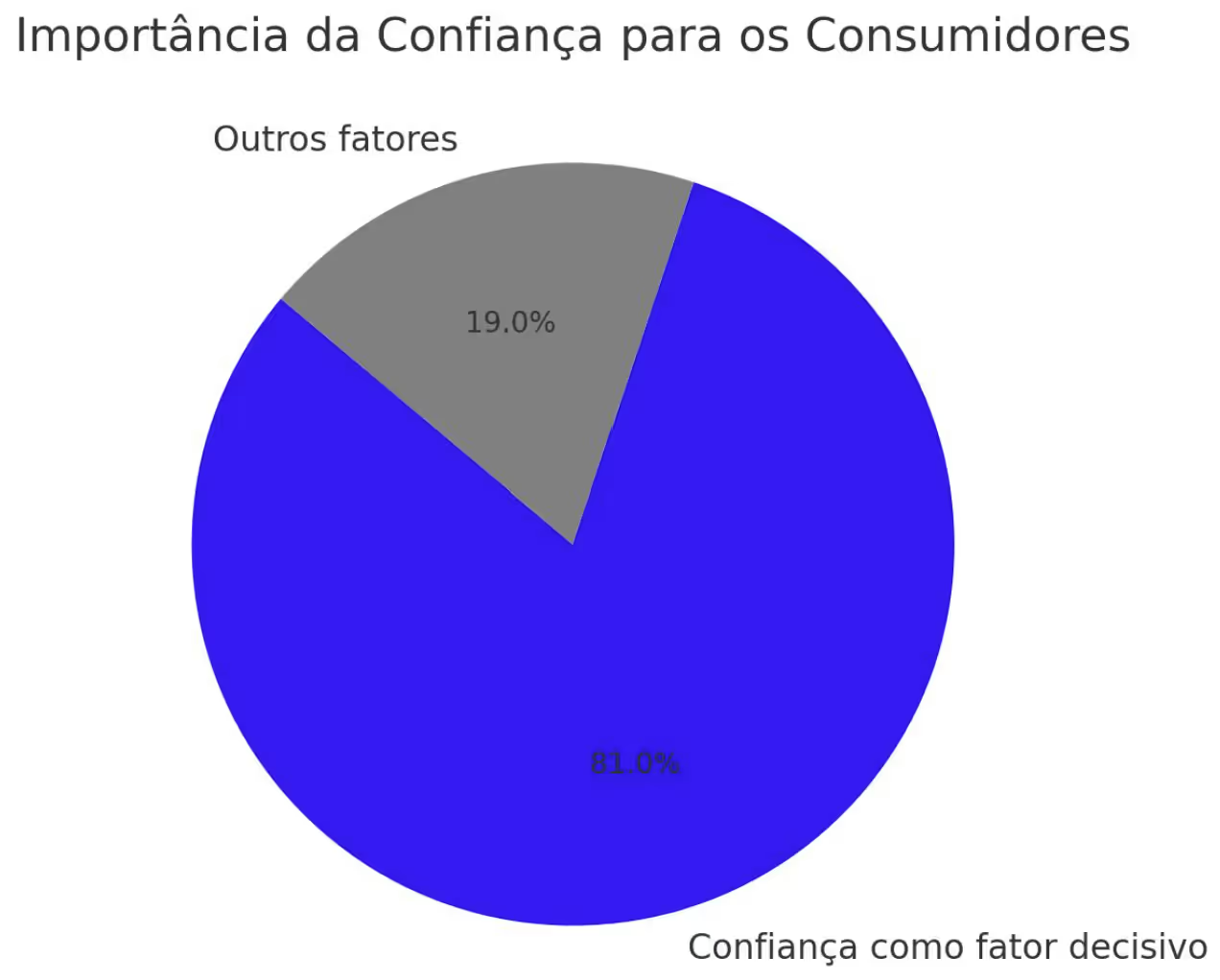
According to the Edelman, trust is the brand's new capital and is a decisive factor for 81% of consumers. That is, a successful scam can alienate a large portion of your audience.
Commitment to digital marketing campaigns

Investing in digital marketing is essential to attract new customers and increase sales. In fact, you should already know that.
However, digital impostors can compromise your campaigns by creating fake ads that divert traffic to malicious sites.
Not only does this waste your marketing budget, it also hurts the performance of your campaigns, as fake traffic rarely converts to sales.
According to Portal Terra, in 2024, the average organic reach on Instagram and Facebook did not exceed 7.60% and 5.90%, respectively. This means that paid traffic is essential to stand out, but also that it is in the sights of scammers and, therefore, it must be protected from impostors.
Traffic redirection and loss of SEO
When impostors create fake sites that mimic yours, they compete directly for online traffic. In fact, if these fake sites manage to rank better than yours in search results, you lose visibility and potential customers!
This traffic redirection not only decreases the number of visitors to your site, but it also hurts your SEO, making it difficult to reach the right audience.
That is, it is a constant battle to ensure that your official website is the first option for those looking for your brand.
Damage to partnerships and collaborations
The strength of your brand image is a fundamental factor in attracting partnerships and collaborations.
Therefore, if your company is seen as vulnerable to scams and fraud, other companies may hesitate to partner with you, fearing that their reputation will also be damaged.
This damage to partnerships can limit your growth and prevent you from taking advantage of business opportunities. Protecting your brand is therefore fundamental to maintaining a good relationship with your partners and collaborators.
How to protect your results against digital impostors?
Faced with this alarming scenario, with digital impostors on the prowl to steal your identity and compromise your results, the question arises: what to do to protect yourself?
To begin with, it is essential to understand that protection against digital impostors is not just a matter of “good practice”, but rather a strategic investment that can prevent significant financial losses and preserve your company's reputation.
To illustrate the magnitude of the problem, a recent study by OLX revealed that Brazilians lost R$ 245 million in digital scams in the first months of 2024 alone. Imagine the impact that this amount represents for the companies that were victims of these scams!
The good news is that there are effective measures to protect your brand and ensure the security of your business. At Branddi, we are experts in protecting brands against the most diverse digital threats!
Therefore, with our expertise and cutting-edge technology, we can help you build an impenetrable barrier against impostors and guarantee the security of your results. In fact, this knowledge also gives us the opportunity to help you protect your brand and your customers!
Below, we will present a complete guide with the main measures you can take to combat digital impostors and ensure the security of your results. Shall we go?
Use Multifactor Authentication (MFA)
Multifactor authentication (MFA) is an extra layer of security that requires more than one form of verification to access an account. That is, instead of just a password, the user must provide a code sent to the cell phone, answer a security question, or use an authenticator app.
Implementing MFA on all of your company's accounts and encouraging your clients to do the same makes it hugely difficult for impostors to access, even if they manage to obtain the password.
It's a simple but extremely effective barrier against unauthorized access.
Monitor suspicious transactions and behavior
Keep an eye out for any unusual activity on your accounts and watch for feedback from your consumers. This includes non-standard transactions, logins from unknown locations, attempts to log in at atypical times: all of this can be a sign that an impostor is trying to act.
For this monitoring, use tools to detect these suspicious behaviors and take immediate steps to investigate and block any suspicious activity. Remember: proactivity is the key to avoiding major losses.
Use support tools
There are several tools available to help you combat digital impostors.
Brand monitoring software, fraud detection systems, and online security platforms can automate the identification and removal of false content, alert you to suspicious activity, and protect your customers from scams.
In other words, we can say that these tools are like sentinels that work 24 hours a day, 7 days a week, to ensure the safety of your brand. And that's exactly what we do here at Branddi! Do you want to know more? Read on and learn more about our work on the topic below!
Protect your brand from digital impostors
How to ensure that your brand is protected against digital impostors? Branddi is your ally! That's because our platform monitors the internet for fake profiles, Fake sites and misleading advertisements.
To this end, our specialized team uses cutting-edge technology to quickly identify and remove content that harms your brand, with full support to implement the best security practices and make your customers aware.
With Branddi, your brand is protected, allowing you to focus on growing your business!
Do you want to know more about Branddi's armor marketing? Visit our website and discover the customized solutions we have for your business!




Ready to shield your brand?
Don't let your customers fall into the clutches of competitors, scammers, and exploiters.